Vietnam Cuisine
Regional Differences Between Northern and Southern Pho in the Eyes of Michelin Experts
When you walk into a pho restaurant in Hanoi and ask for an extra plate of fresh herbs, you are likely to be met with a polite but clear shake of the head. Ask for black bean sauce or bean sprouts the way diners often do in Ho Chi Minh City, and you might be surprised at the difference in attitude. These small moments highlight a deeper truth: although this dish is beloved across Vietnam, the style found in the North and the South expresses very different regional philosophies, tastes, and histories.
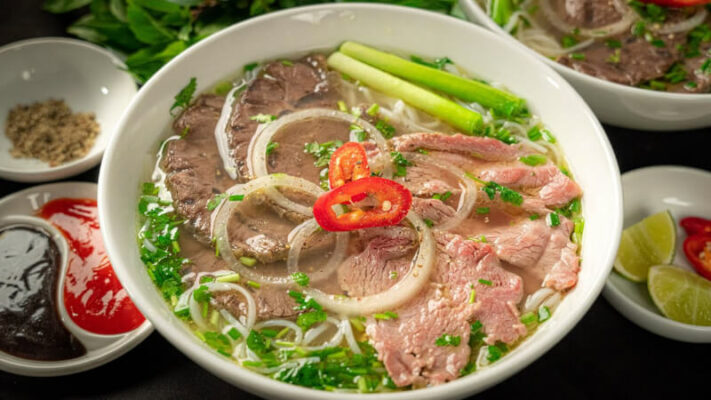
Imagine of a traditional Pho in Vietnam
Fundamental Differences: Ingredients and Seasonings
According to Head Chef Luke Easton, chef of Tre Dining, a restaurant recognized by the Michelin Guide in Ho Chi Minh City, Southern-style pho tends to include a broader range of condiments and accompaniments. Diners in the South often enjoy adding hoisin sauce (sweet black bean sauce), sweet chili sauce, bean sprouts, and a variety of fresh herbs such as Thai basil and culantro. The broth itself is usually darker in color and sweeter in taste, a reflection of both Southern palates and local culinary influences.
In contrast, Northern pho is known for its simplicity and purity. At its heart, a classic Northern bowl includes just the essentials: flat rice noodles, clear and aromatic broth, thinly sliced beef or chicken, and green onions. Additional garnishes are minimal, and diners may choose to add a splash of lime or some pickled chili vinegar, but rarely are herb platters or rich sauces offered alongside the dish. This restraint comes from a regional value placed on showcasing the broth’s carefully balanced flavor, which chefs spend countless hours perfecting.
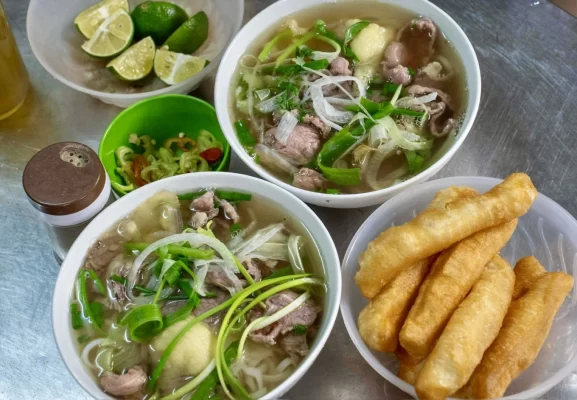
Bottles of traditional Pho in Hanoi with clear and light broth
Historical Roots and Cultural Influences
The origins of the traditional dish is not straightforward, and even experts admit the exact beginnings are debated. Some culinary historians argue pho was inspired by Chinese noodle soups while others see clear influences from French cuisine, particularly in the use of beef, which was not traditionally common in Vietnamese diets before the early 20th century. Under French colonial rule, beef became more widely available due to French preferences for dishes like steak and beef stew. Vietnamese cooks began using beef bones and meat to make rich broth, combining it with rice noodles—likely influenced by southern Chinese noodle traditions—to create the earliest versions of this dish on the streets of Hanoi’s Old Quarter.
Chef Peter Franklin, a celebrated chef of a Michelin-starred restaurant in Ho Chi Minh City, famously described pho as having “French blood, a Chinese body, and a Vietnamese soul”—an evocative way of capturing its composite heritage.
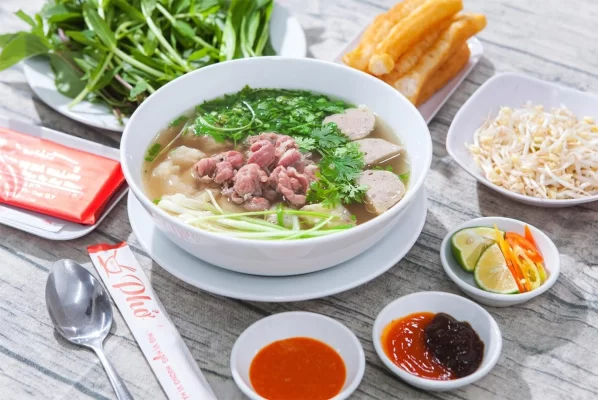
A bottle of Pho in Southern-style
Migration and the Evolution of Regional Tastes
The dramatic divergence between Northern and Southern pho really took shape after 1954, when many people from the North migrated South due to political and social upheavals. These migrants brought with them their traditional recipes, but upon settling in Southern regions like Saigon (now Ho Chi Minh City), they found that local tastes were very different. Southern cuisine, shaped by the fertile Mekong Delta, embraced fresh herbs, complex flavors, and sweetness—preferences that were less common in the more austere and cool climate of the North.
In adapting pho to local palates, Southern cooks began sweetening the broth with ingredients like rock sugar or daikon, and providing a vibrant platter of herbs and sauces for diners to customize their bowls. The result is pho that is not only hearty but also interactive: a dish whose final flavor is shaped by the diner’s own additions.
Tradition versus Innovation: A Modern View
Since the mid-20th century, both styles have continued to evolve independently, each representing a distinct culinary philosophy.
In Hanoi, pho remains tied to its traditional roots. Restaurants here are celebrated for consistency, balance, and deep respect for the original flavor profile. Many such establishments have been honored with Bib Gourmand awards by the Michelin Guide, recognizing their excellence in delivering high-quality yet affordable food.
Meanwhile in Ho Chi Minh City, chefs have taken the principles of pho and pushed them into creative territory. At Tre Dining, for example, Chef Easton has experimented with luxurious ingredients like foie gras in pho, while other renowned chefs have introduced innovative concepts such as truffle pho priced at over $100, pho-inspired cocktails called “Phojitos,” and even molecular pho spheres – a playful reimagination of the dish’s elements.
In August 2023, one celebrated chef opened Pot Au Pho, a restaurant dedicated entirely to exploring pho in imaginative ways. He described it as “a tribute to pho,” a place to experiment boldly with every aspect of the iconic dish.
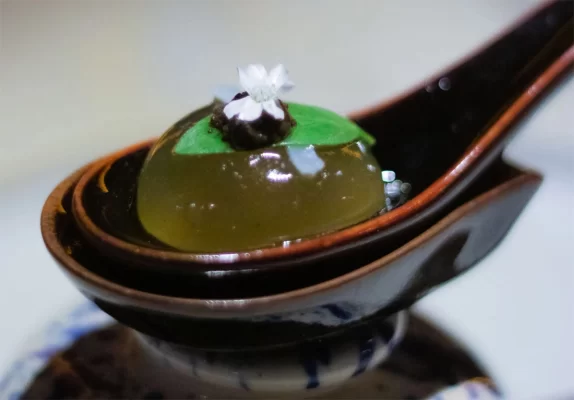
The molecular pho is served on a spoon
Enduring Legacy
Whether enjoyed in its pure and understated Northern form or in its rich, herb-laden Southern incarnation, pho continues to serve as a symbol of Vietnamese culture—one that bridges tradition and innovation. It remains a compelling expression of regional identities, yet its adaptability also ensures it continues to evolve globally as chefs and diners alike discover new ways to appreciate Vietnam’s most iconic noodle soup.