News
Hoi An: Foreign Tourists Excited to Learn Carpentry and Sedge Mat Weaving
In recent days, the ancient town of Hoi An has become even more vibrant as international visitors eagerly take part in hands-on cultural experiences at Kim Bong Craft Village, a traditional village with a history spanning more than 500 years. Here, tourists are not merely observers, they become active participants in long-standing Vietnamese crafts such as carpentry and sedge mat weaving.
On February 28, hundreds of visitors gathered to join the Kim Bong Traditional Craft Festival, held in Hoi An Ward, Da Nang City. The festival recreated the authentic atmosphere of a traditional craft village, where a wide range of artisanal practices, including woodworking, sedge mat weaving, basket boat making, and bamboo root sculpture were demonstrated in a lively and immersive setting.
The event plays an important role in preserving and promoting Vietnam’s traditional cultural values while introducing them to both domestic and international tourists. More than just a celebration or tribute to ancestors, the festival in Hoi An offers a rare opportunity for visitors to directly engage with artisans and understand the effort, skill, and patience behind each handmade product.
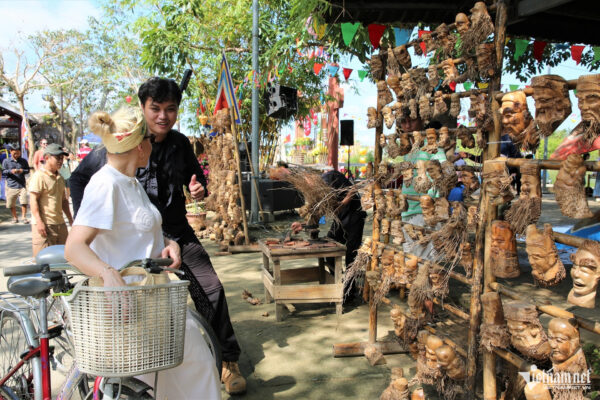
Kim Bong Traditional Craft Festival becomes an attractive event in Hoi An
Hands-on Cultural Experiences
Many foreign tourists showed great enthusiasm as they picked up chisels and carving tools to try woodworking under the guidance of experienced craftsmen. Others sat alongside local artisans to learn how to weave sedge mats, an activity that requires precision, rhythm, and attention to detail.
Kim Bong Village in Hoi An, established in the 16th century, is renowned for its skilled carpenters and traditional handicrafts. Historically, artisans from this village contributed to the construction of important architectural works, including structures in the Hue Imperial Citadel and the ancient town of Hoi An.
Despite the passage of time and modernization, the village has managed to preserve its unique identity, making it an attractive destination for cultural tourism. Today, visitors can not only witness these traditional crafts but also experience them firsthand, an approach that has proven especially appealing to international travelers seeking authentic and meaningful travel experiences.
The Art of Transformation
One of the highlights of the festival is bamboo root sculpture. From rough and irregular bamboo roots, skilled artisan Huynh Phuong Do creates intricate works symbolizing prosperity, happiness, longevity, and wealth. Each piece is unique, reflecting both the natural form of the material and the artisan’s creativity.
Foreign visitors are often amazed by how something seemingly ordinary can be transformed into meaningful artwork. Regina, a tourist from the United Kingdom, shared that she was deeply impressed by the craftsmanship, noting how raw bamboo roots were turned into vivid and symbolic sculptures.
Similarly, visitors are fascinated by the meticulous process of woodworking. Under the patient guidance of People’s Artisan Huynh Suong, tourists learn each step of carving, from shaping the wood to adding detailed patterns. Some even try carving zodiac animals that correspond to their birth year, creating personalized souvenirs to take home.
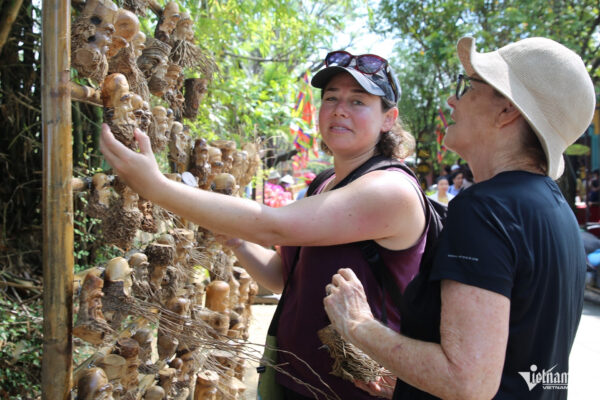
Foreign tourists are excited with products made from bamboo
Discovering the Craft of Sedge Mat Weaving in Hoi An
Another activity that draws significant interest is sedge mat weaving, a traditional craft deeply rooted in Vietnamese daily life. Using thin, flexible sedge fibers, artisans weave colorful mats that are both functional and aesthetically pleasing. These mats are commonly used in Vietnamese households for sitting, sleeping, or even as decorative items.
The weaving process involves multiple stages, including harvesting, drying, dyeing, and weaving the sedge. Each step requires patience and skill, making the final product a true reflection of the artisan’s dedication.
Many foreign tourists expressed admiration for this craft. A visitor from the United States shared that she was fascinated by how delicate sedge fibers could be transformed into vibrant mats. She described the experience of listening to the village’s history while weaving her own mat as both enjoyable and memorable.
A Memorable Family Experience
For many families, the experience goes beyond simple tourism, it becomes a meaningful bonding activity. Audrey, a tourist from France, visited the village with her husband and two children. She said that instead of just sightseeing, her family had the opportunity to create something with their own hands, making the trip more engaging and unforgettable.
Children, in particular, find joy in the process. Some carefully carve their names into small wooden boards, experiencing for the first time the patience and precision required in traditional craftsmanship. These small achievements often become cherished memories from their journey.
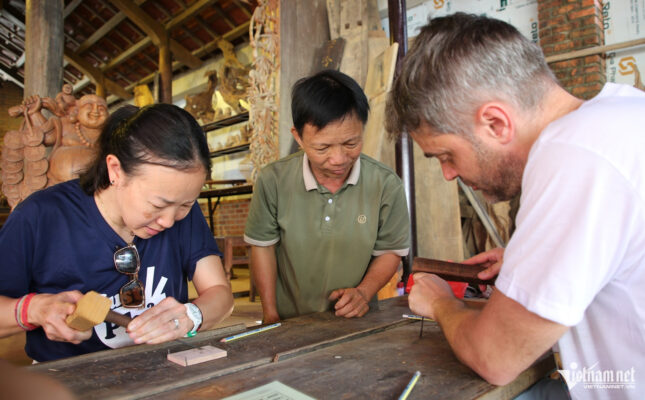
People’s Artisan Huynh Suong meticulously guides visitors through each carving step
as they experience the Kim Bong woodworking craft.
Preserving Heritage Through Tourism
The Kim Bong Traditional Craft Festival in Hoi An has gradually become a cultural highlight, attracting a growing number of international visitors. By combining heritage preservation with interactive tourism, the village offers a sustainable way to maintain traditional crafts while generating economic benefits for local communities.
This model of experiential tourism allows visitors to connect more deeply with local culture. Instead of passively observing, they gain a genuine appreciation for the craftsmanship and cultural significance behind each product.
A Taste of Local Life
After a day of hands-on activities, visitors can enjoy simple yet delicious local dishes at the Kim Bong countryside market. This final part of the experience allows them to relax and reflect on a day filled with cultural discovery, creativity, and connection.
As the sun sets over the Thu Bon River, tourists leave not only with handmade souvenirs but also with a deeper understanding of Vietnam’s traditional crafts and the people who keep them alive.