News
The Brilliant Red of Silk Cotton Flowers in the Ancient Capital of Hoa Lu
From the first to the third lunar month each year, visitors traveling to Ninh Binh are not only immersed in breathtaking natural landscapes and the sacred atmosphere of traditional festivals, but are also treated to a familiar seasonal spectacle – the blooming season of silk cotton flowers.
These vibrant blossoms, known locally as “hoa gạo” and internationally as silk cotton flowers (also called red cotton tree flowers), mark the transition from spring to summer. More than just a seasonal sign, they serve as vivid accents that bring life and warmth to the ancient heritage landscape of the former imperial capital of Hoa Lu, attracting large numbers of visitors eager to admire their beauty.
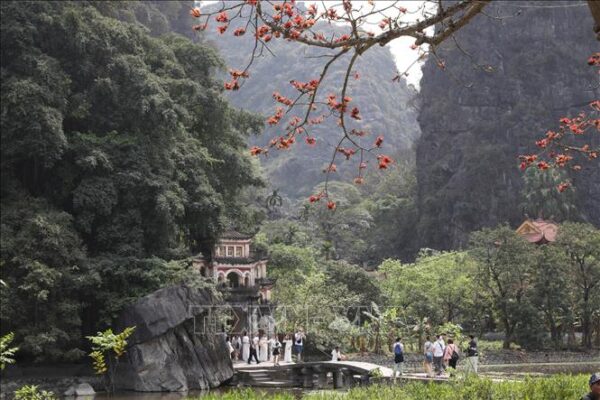
The silk cotton tree stands out amidst the majestic mountain scenery next to the 600-year-old ancient temple
in the Tam Coc – Bich Dong tourist area
A Flaming Torch in the Heart of Heritage
Silk cotton flowers – also referred to as kapok flowers or Bombax ceiba – typically bloom in the third lunar month. Their flowering signals the end of the lingering chill of spring and the arrival of early summer sunshine.
These trees are often found along riverbanks, beside rural roads, or scattered around communal houses and temples. Their presence evokes a deep sense of nostalgia, reminding visitors of peaceful countryside life in northern Vietnam. In Ninh Binh, the silk cotton flowers stand out dramatically against a backdrop of limestone mountains, winding rivers, and lush greenery, enhancing the region’s already dreamlike scenery
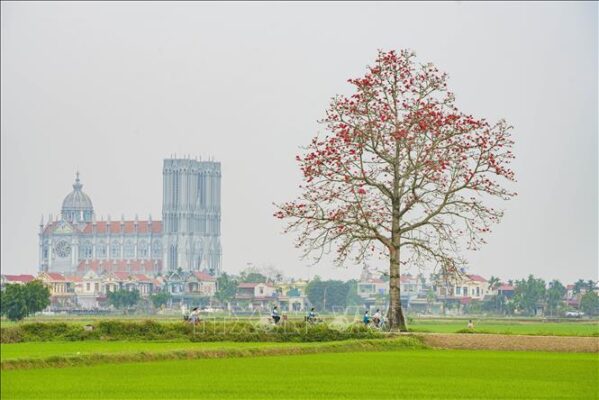
The kapok flowers bloom in vibrant red along the roads in Ninh Binh
One of the most iconic locations to admire these flowers is Bich Dong Pagoda, a historic temple nestled against a mountainside and dating back over 600 years. The pagoda is renowned not only for its ancient architecture but also for its century-old silk cotton trees that burst into bloom each year.
Standing just to the left of the pagoda’s entrance, a towering silk cotton tree serves as a natural focal point, enhancing the temple’s tranquil and mystical atmosphere. Its brilliant red blossoms contrast beautifully with the moss-covered roofs, gray limestone cliffs, and the surrounding greenery. Beneath its shade, elderly locals often pause to rest after visiting the pagoda, regarding the tree not merely as a plant, but as an old companion that has witnessed the passage of time.
According to a local resident, Mrs. Thuy Nguyen, the tree was planted by her grandfather more than a century ago. Over the years, it has become deeply intertwined with the memories of generations. As a child, she would gather fallen blossoms to play simple games; now, in her later years, she finds peace standing beneath its branches, listening to birds chirping as they sip nectar from the flowers.
She describes the color of the blossoms not as a harsh red, but as a deep, subdued tone that harmonizes with the ancient, mossy surroundings of the pagoda and the solemn beauty of nearby caves. To her, the tree is like a silent guardian, standing watch at the temple gate and reminding future generations of resilience, simplicity, and cultural roots. Even as she grows older, she hopes the tree will continue to bloom brightly every March, so that visitors from afar can still feel the peaceful spirit of this ancient land.
A Must-Visit Check-in Spot for Travelers
In recent years, silk cotton flowers in Ninh Binh have become more than just a natural feature, they are now an essential part of the region’s tourism identity. Each March, both locals and tourists flock to famous blooming spots to take photos and experience the fleeting beauty of the season.
Popular locations include the silk cotton flowers in Yen Mo District, those scattered along the dikes and limestone ranges of Van Long Nature Reserve, and the blossoms near Tam Chuc Pagoda. These sites offer a unique blend of natural beauty and cultural heritage, making them highly attractive to photographers and travelers alike.
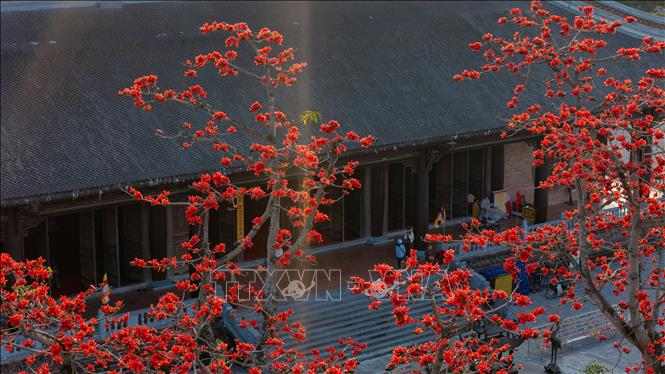
The silk cotton flowers bloom in vibrant red at Tam Chuc Pagoda, Tam Chuc Ward, Ninh Binh Province.
Photographer Duc Nguyen, based in Hoa Lu City, notes that March is always a busy time for capturing silk cotton flowers. He describes the silk cotton flowers of Ninh Binh as a perfect fusion of opposites – the stillness of stone and the intensity of fire. Their vivid red color is highly sensitive to lighting; under harsh sunlight, details can be lost, but during early morning mist or late afternoon golden light, the silk cotton flowers appear like glowing torches in a tranquil, ancient landscape.
Capturing the moment when a flower falls is particularly challenging, as silk cotton blossoms do not drift gently like other flowers, they drop quickly and directly, like arrows falling from the sky. This fleeting motion adds to their unique charm and symbolism.
For visitors hoping to take memorable photos, early morning or sunset is considered the ideal time, when lighting conditions best highlight the rich red hues against the sky. Many young travelers also choose outfits that complement the nostalgic setting, such as traditional Vietnamese costume (ao dai) or soft, neutral-toned clothing that contrasts elegantly with the vibrant blossoms.
A Fleeting Yet Unforgettable Season
The silk cotton flower season is brief, lasting only a few weeks from March to early April. This short-lived beauty makes it even more precious, drawing visitors who wish to witness and capture the moment before it fades.
Whether standing beneath a centuries-old tree, watching petals fall onto still water, or simply admiring the blossoms against a dramatic mountain backdrop, the experience leaves a lasting impression. The flowers are not just visually striking, they carry emotional and cultural significance, symbolizing the rhythm of nature, the passage of time, and the enduring soul of northern Vietnam’s countryside.
In the end, the silk cotton flower season in Hoa Lu is more than a natural phenomenon. It is a poetic intersection of history, culture, and nature. For every traveler who visits, it offers not only stunning scenery but also a quiet moment of reflection, deeply rooted in the timeless beauty of Vietnam’s heritage.