News
Meo Vac Market Fair Is During The Most Vibrant Season Of The Year
The weekly market in Meo Vac, held every Sunday, becomes the liveliest time of the year during winter. It attracts not only local traders from across the region but also a growing number of visitors eager to explore its unique cultural atmosphere and cuisine.
In the final days of the year, the rocky plateau of Ha Giang is often covered in light drizzle and thick mist, creating a quiet and somewhat melancholic landscape. However, as the weekend approaches, the atmosphere transforms dramatically. The stillness gives way to bustling energy as people gather for the weekly market, turning the town into a vibrant hub of activity.
The Meo Vac Market Fair takes place in the town center, beginning as early as 4 a.m. and lasting until around 4 p.m. From dawn, people from 18 communes and neighboring districts begin their journey, some on foot, others by motorbike, bringing goods to trade. Men, women, children, and elderly people all participate, making the market a true reflection of community life.
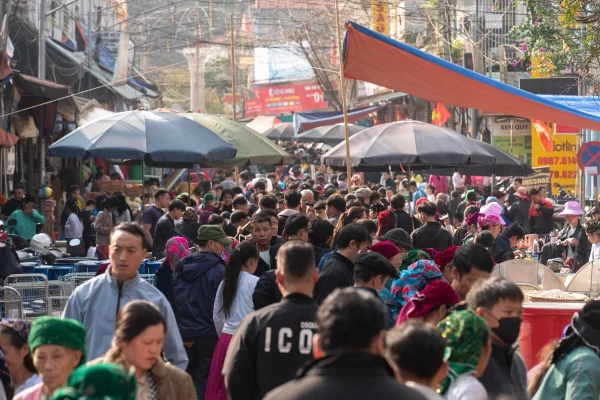
The vibrant atmosphere of Meo Vac Market Fair
As the largest market in Ha Giang province, it is carefully organized into sections based on the types of goods sold. Visitors can find everything from everyday necessities to agricultural products. The structure of the market makes it easy to navigate while still preserving the organic, lively feel of a traditional highland gathering.
According to cultural researcher Nam Nguyen (38, Hanoi), who has visited the Meo Vac market multiple times throughout the year, the busiest period is around the Lunar New Year. Before the holiday, locals come to shop for food, clothing, and supplies to prepare for celebrations. After the New Year, the market shifts into a more festive role, with games, social gatherings, and cultural activities bringing people together.
At the Meo Vac market entrance, the busiest trading takes place. Here, buyers and sellers negotiate over livestock such as cattle and poultry, as well as tools, food items, and snacks like fried cakes and corn cakes. In recent years, small stalls selling electronics have also appeared, reflecting changing consumer needs in the region.
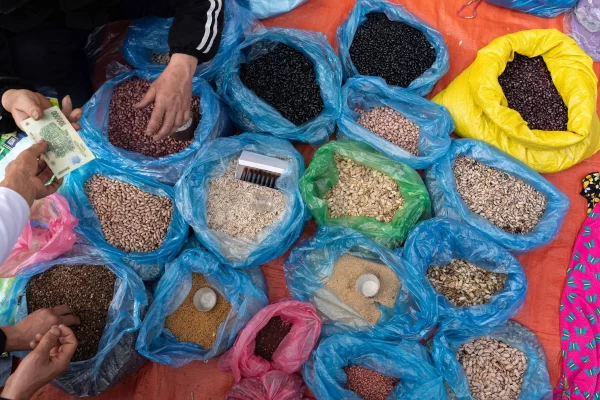
Many local products are sold in the Meo Vac Market Fair
Most of the goods sold at the Meo Vac market are locally produced. Farmers bring vegetables, handmade tools, traditional textiles, spices, and medicinal herbs that they have cultivated or crafted themselves. This not only ensures freshness and authenticity but also highlights the self-sufficient lifestyle of the highland communities.
One outdoor section is dedicated to corn wine, a signature specialty of Ha Giang. Women dressed in colorful traditional clothing sit in rows, measuring and selling the wine by the liter. Visitors are often invited to taste before buying, creating a warm and interactive experience. Corn wine plays an essential role in local culture, it is present in rituals, celebrations, and social gatherings, symbolizing hospitality and connection.
Nearby, there are areas where people sit together to drink, chat, and socialize. These informal gatherings are just as important as the buying and selling, reinforcing the market’s role as a social center rather than merely a commercial space.
At the heart of the market lies a two-story food area, which is always the most crowded section. On the ground floor, food stalls are clearly arranged, offering a wide variety of traditional dishes. Visitors can enjoy local specialties such as thang co (a traditional stew made from horse meat), Trang Kim-style pho, buckwheat cakes, steamed cornmeal, and bitter herbal porridge.
Tuong Vi and Phuong Thao, from Hanoi, went to Meo Vac Market Fair for visiting. Two of them were surpired by vibrant atmosphere here. They said that pho in that market was different from in Hanoi, not included lemon leaves, but they can taste richer flavor.
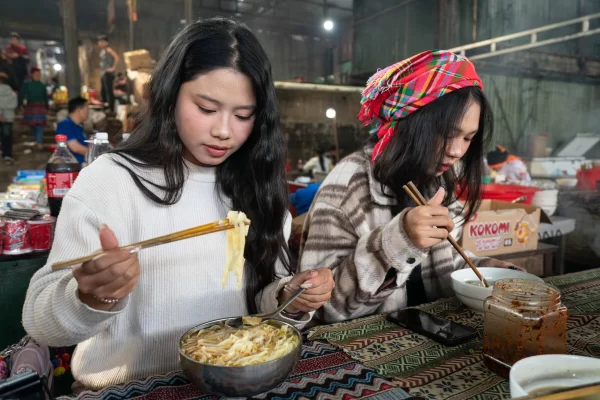
Tourists tasted pho in Meo Vac Market Fair
The second floor houses sections for fresh meat, where vendors butcher and sell buffalo and beef. The Meo Vac market also serves as a key supply point for meat traders in the region, demonstrating its economic importance beyond the local community.
Another popular area, particularly among women, is the clothing section. Here, vibrant garments embroidered with traditional patterns of ethnic groups such as the Hmong, Dao, and Lo Lo are displayed. Jewelry and accessories are also available, allowing visitors to experience the rich aesthetic traditions of the region.
Having visited many highland markets, including those in Dong Van and other nearby areas, Nam Nguyen observes that while these markets share similar characteristics, Meo Vac stands out for its larger scale and diversity. After the relocation of the old Dong Van market in 2012, Meo Vac has become the largest and most culturally representative market in the region.
Most people attending the market wear their traditional attire, adding vibrant colors to the already lively setting. The goods sold also reflect the cultural identity of each ethnic group. The slightly worn and rustic appearance of the market creates a nostalgic atmosphere, offering visitors a glimpse into a way of life that has remained largely unchanged for generations.
For the local people, the market is deeply embedded in daily life. Children grow up accompanying their parents and grandparents, learning traditions and social customs from an early age. The market is not only a place to buy and sell goods but also a space to reconnect with friends, meet new people, and even form romantic relationships.
Next to the market is a stadium where a traditional Hmong custom known as “wife-catching” sometimes takes place. Young men may participate in this ritual, while older men often gather to drink and socialize. While such traditions remain part of local culture, there is also a growing awareness of the need to gradually eliminate outdated practices.
Ultimately, the Meo Vac Market Fair is more than just a marketplace, it is a living cultural space. It preserves the identity of ethnic communities in Ha Giang while adapting to modern influences. For visitors, it offers an immersive experience into the rhythms of highland life, especially during winter when the market is at its most energetic and vibrant.