News, Vietnam Transportation
The Village Where Ho Chi Minh Once Lived in Hue – Duong No: Peacefully Blooming Before Spring Arrives
In the joyful atmosphere of preparation for the Year of the Fire Horse, Duong No Village, in Duong No Ward, Hue City, seems to don a vibrant, renewed look bursting with life and color. This place is not just a quiet, rustic ancient village; it holds invaluable memories of the youthful years of Ho Chi Minh, one of Vietnam’s greatest national leaders.
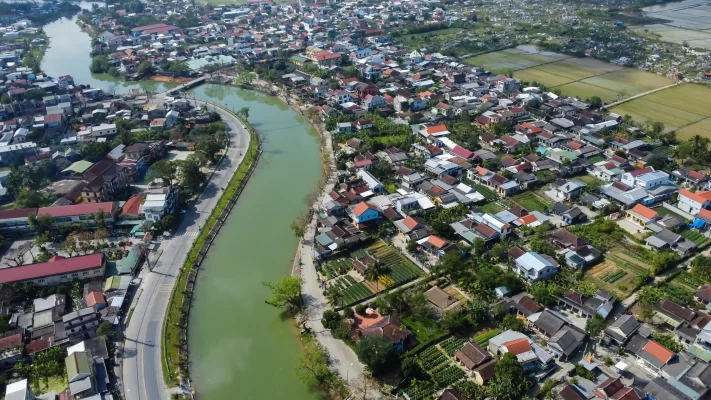
The view of Duong No village from the flycam
A Village Awakening to Spring
As the Lunar New Year approaches, Duong No Village appears to be “wearing a new outfit” to welcome a spring full of hope and optimism. In the cool air of early winter (the last month of the lunar calendar), the village emerges like a traditional ink-and-wash painting, set apart from the bustling urban noise. A riot of flowers blooms, and the flag of the nation – red with a golden star adds a bold splash of color against the green countryside and rustic rooftops.
The approach to the village is lined with paths where native yellow apricot blossoms (hoa mai) burst into bloom, welcoming spring just as they have for generations. Villagers carefully tend chrysanthemums and other flowers beside traditional houses, preparing for both the New Year and visitors who come to catch a glimpse of timeless rural beauty.
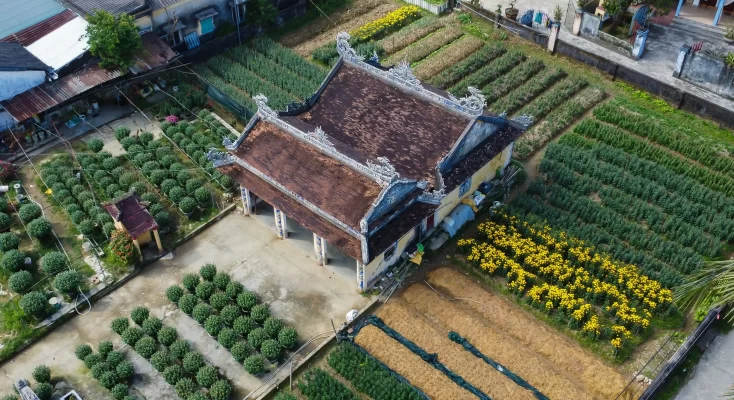
Yellow chrysanthemum is grew next to the ancient house
Life in Duong No: A Snapshot of Tranquility
Duong No is located about seven kilometers east of the famous Truong Tien Bridge, which spans the iconic Perfume River in Hue City. From afar, the village looks like a serene landscape painting: quiet, unhurried, and steeped in historical charm. The slow rhythm of life here contrasts sharply with vibrant city streets, offering a peaceful world where time seems to move gently.
Traditional clay-tiled roofs, water wells by the river’s edge, and the village communal house (đình) embody the quintessential beauty of Vietnamese rural life. In the morning, a wisp of smoke rises from kitchen hearths as families prepare simple meals. Farmers tend their small garden plots, while elders sit under the shade of banyan trees, catching up on village news. During the cooler months, mist often drifts over the fields, enhancing the village’s picture-perfect stillness.
A Place of Deep Historical Importance
What makes Duong No Village especially meaningful to many visitors and locals alike is that it is a place where Ho Chi Minh, known by his childhood name Nguyen Sinh Cung, lived with his family when he was young. The village proudly preserves this connection as a point of cultural and historical pride.
According to records from the Ho Chi Minh Museum, in 1898 Nguyen Sinh Sac, the father of Ho Chi Minh, brought his two sons, Nguyen Sinh Khiem and Nguyen Sinh Cung, to live and teach in Duong No. The family lived in a modest three-room house with two side rooms, generously offered by a local resident named Nguyen Si Do. It was in this simple hut, with its thatched roof and clay walls, that young Nguyen Sinh Cung began to learn classical Chinese characters from his father, laying a foundation not just for academic learning but also for moral education through lessons about ethics and humanity.
These early teachings on concepts such as “humaneness” (Nhan) and “righteousness” (Nghia) were more than academic lessons; they were moral principles that later helped shape his worldview and leadership philosophy. The humble setting of these first teachings reflects the simple but profound beginnings of a figure who would go on to play a central role in Vietnamese history.
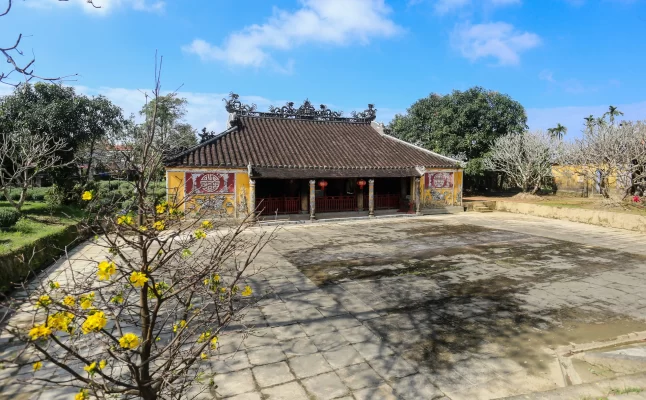
The Duong No Communal House remains majestic after enduring many historical changes
Growing Up Among Farmers
For more than a decade, young Nguyen Sinh Cung grew up immersed in the day-to-day life of Duong No’s villagers. He walked the fields, helped his family, and absorbed the culture of kindness, sharing, and community that defined the village. Villagers recall how the young boy often played among the rice paddies and gardens, learning from farmers and elders alike. Their warmth, generosity, and genuine care contributed deeply to his formative years, nurturing in him a profound love for his homeland and its people.
The friendliness and unity of the villagers left a lasting impression on him. These early experiences in a countryside setting taught him humility and forged a deep appreciation for the simple joys and hardships of rural life. These values would accompany him throughout his life and leadership journey.
Preserving Cultural Legacy
Today, Duong No Village actively preserves this heritage. The original simple house where the young Ho Chi Minh once lived has been maintained as a historical site, allowing visitors, especially students and young people to connect with the humble beginnings of a figure now central to Vietnam’s national narrative. The garden in front of the house, especially during early spring, bursts with yellow apricot flowers, creating a stunning contrast against the red clay rooftops that define the traditional architectural style of central Vietnam.
Every year, as Tet (Lunar New Year) approaches, the village becomes more lively, not just with flowers and flags but with cultural activities. Local elders often share stories of the village’s past, and school groups come to learn about the life of Ho Chi Minh and the historical significance of this peaceful place.
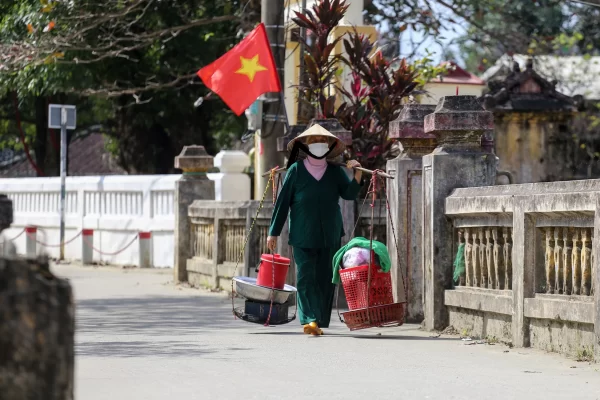
A peach and warm lifestyle
A Timeless Setting for Reflection
Walking through Duong No Village during this season, one can almost hear echoes of the past, children laughing in fields, elders discussing the weather, and fishermen mending nets by the river. The calm waters of the nearby Phu Loi River reflect the sunrise each morning, reminding visitors of the enduring beauty of Vietnam’s countryside.
This village, quiet yet rich in history, simple yet vibrant with cultural life, stands as a testament to the enduring spirit of rural Vietnam. As spring approaches, Duong No doesn’t just prepare for a new year; it invites all who come to celebrate beauty, tradition, and the legacy of a boy who once walked its paths and grew up to become a leader remembered by millions.