Vietnam Transportation, News
Discover Van Long Slope – an “Ancient Egypt Corner” in the Gia Lai Highlands
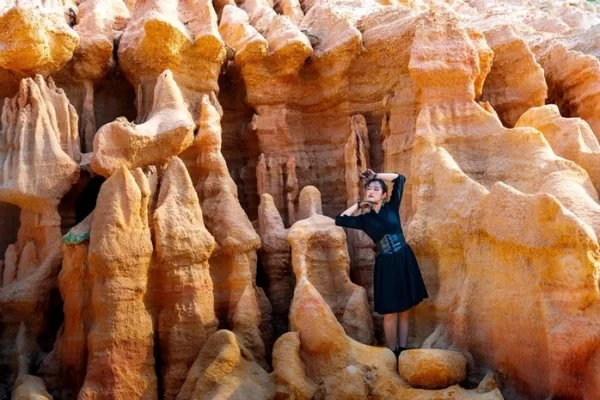
Hidden within the red basalt highlands of Gia Lai Province, Van Long Slope has recently emerged as a fascinating new check-in destination for explorers and photographers. What was once merely a familiar path leading to local farmers’ fields has unexpectedly gained popularity after striking photos circulated widely on social media. The slope’s layered rock and soil formations, colored in warm shades of yellow, brown, and gray, create a surreal landscape that many visitors liken to a scene from ancient Egypt.
Table of Contents
ToggleSituated in Pliet Kte Village, Ia Hru Commune, the slope, also known as “Buffalo Back Slope”, remains largely untouched by tourism development. For years, it served only as a routine access road for residents traveling to their plantations. Yet, as more travelers search for unique natural landscapes, the geological beauty of this place has captured attention, turning it into a new highlight on the map of Gia Lai tourism.
Unique beauty of Van Long Slope
A Unique Geological Signature
The distinctiveness of Van Long Slope lies in its unusual terrain. Its surface is composed of layered soil and stone formations that curve and ripple like frozen waves, sculpted patiently by natural erosion over countless years. Wind, rain, and water flow gradually shaped the basalt soil, carving out grooves and ridges that appear almost artificially designed but are entirely natural.
From a distance, the slope resembles an immense geological tapestry stretching across the highland plateau. Its layered textures create a dramatic yet harmonious landscape, blending softness with grandeur. The interplay of earthy hues – yellow, brown, and gray- enhances the visual impact, making the scene appear cinematic, as if visitors had stepped onto a film set inspired by desert civilizations of the past.
Early morning and late afternoon are considered the most mesmerizing times to visit. When sunlight slants across the slope, every layer and ripple stands out sharply, revealing the intricate patterns etched into the land. The shadows emphasize depth and movement, transforming the entire hillside into a living sculpture shaped by time.
For photography enthusiasts, Van Long Slope offers endless creative possibilities. Without any man – made structures, the attraction relies entirely on its raw, untouched beauty. This pristine quality is precisely what draws visitors seeking authentic experiences rather than heavily commercialized tourist spots.
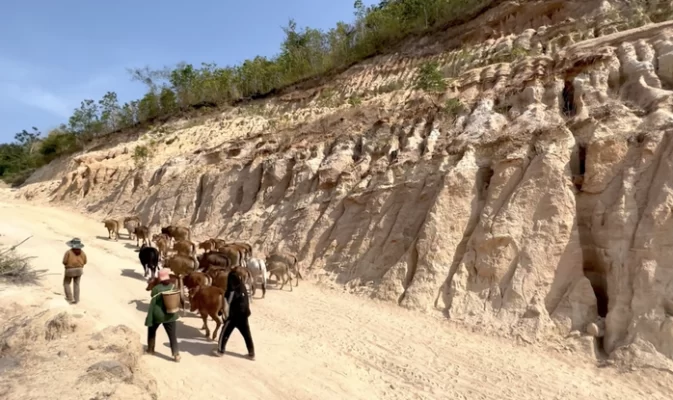
In the past, Van Long Slope was the way to the field of local people
From a Rural Path to a Rising Attraction
For generations, local residents of Pliet Kte Village used the slope simply as a route to reach their farms. It was not regarded as a scenic site but rather as a practical path integrated into daily life. The transformation began only recently, when several photographers shared artistic images online, revealing the slope’s unusual patterns and colors to a wider audience.
The sudden online attention sparked curiosity among young travelers and adventurers. Soon, the location began appearing in travel blogs and social media posts, rapidly gaining recognition as a must – visit check – in spot in Gia Lai. Despite this newfound fame, the area still retains its quiet atmosphere and sense of mystery, allowing visitors to enjoy a genuine exploration rather than a crowded tourist experience.
Unlike famous destinations that are already developed with amenities and infrastructure, Van Long Slope remains largely untouched. There are no elaborate signboards, souvenir stalls, or structured services. This absence of commercialization enhances the sense of discovery, making each visit feel like a personal adventure through a hidden natural wonder.
Experiencing the Raw Beauty of the Highlands
Compared with many well-known tourist attractions, Van Long Slope still preserves its pristine and rustic character. Travelers who come here often feel as though they are stepping into an unexplored land, where nature itself becomes the main storyteller. The landscape evokes a mix of wonder and tranquility, allowing visitors to pause, observe, and appreciate the silent artistry of geological processes.
The slope is located about 54 kilometers from the center of Pleiku City, along National Highway 25 toward eastern Dak Lak Province. The route is accessible by both motorbike and car, making it suitable for day trips from Pleiku or nearby towns. From the main road, visitors typically ask local residents for directions, adding a sense of local interaction and community connection to the journey.
Because the terrain consists mainly of sandy soil and clay, the site can become quite hot during sunny days. Travelers are advised to prepare appropriate footwear, hats, sunglasses, sunscreen, and plenty of drinking water to ensure a safe and comfortable visit. The dry season from around October to June of the following year is generally considered the best time to explore, as the weather is more favorable and the ground is less slippery.
Opportunities for Experiential Tourism
The emergence of Van Long Slope demonstrates that Gia Lai Province still holds numerous unexplored destinations waiting to be discovered. Its uniqueness lies not only in its geological features but also in its ability to offer a meaningful connection with nature. Visitors can walk along the slope, observe the layered formations up close, and imagine the thousands of years of natural processes that shaped them.
Moreover, the location’s proximity to other attractions enhances its appeal. Travelers can easily combine their trip with visits to Phu Cuong Waterfall, Ayun Ha Irrigation Lake, or nearby indigenous cultural villages. Such combinations allow tourists to experience both the natural scenery and the rich cultural heritage of the Central Highlands in a single journey.
This integration of natural exploration and cultural immersion adds depth to the travel experience. Rather than being just a quick photo stop, Van Long Slope can become part of a broader itinerary that highlights the diversity of Gia Lai from majestic waterfalls to traditional ethnic villages.
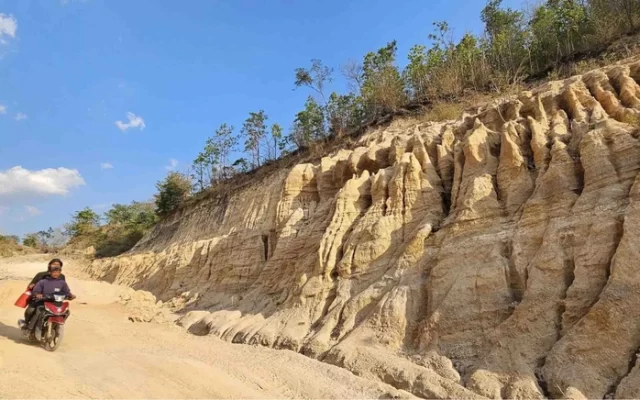
The pristine beauty of Van Long Slope
Preserving Nature While Promoting Tourism
As the slope gains increasing attention, concerns about environmental preservation have also arisen. Tourism experts emphasize the importance of developing the site sustainably from the outset. Uncontrolled or spontaneous exploitation could damage the fragile geological formations and disrupt the surrounding natural ecosystem.
Protecting the landscape means maintaining its authenticity and limiting excessive construction or commercialization. Responsible tourism practices, such as minimizing litter, respecting natural boundaries, and raising awareness among visitors, are essential to ensuring that Van Long Slope retains its original charm for future generations.
The challenge lies in balancing promotion and preservation. While the site has great potential to boost experiential tourism in Gia Lai, its value depends precisely on its untouched character. Any development should therefore focus on subtle improvements, such as basic signage, safety guidelines, and environmental education, without altering the core natural features that make the slope so distinctive.
A Hidden Gem of the Central Highlands
The rise of Van Long Slope as a travel destination reflects a broader trend: modern travelers increasingly seek off-the-beaten-path experiences that showcase authentic natural landscapes. In a region already famous for primeval forests, powerful waterfalls, and winding mountain roads, this newly discovered slope adds another dimension to the appeal of the Central Highlands.
Standing atop the slope and gazing across the vast plateau, visitors may feel transported to another world—a place where time seems frozen and nature quietly reveals its artistry. The layered waves of soil and stone tell a silent story of erosion, resilience, and transformation over centuries.
Ultimately, Van Long Slope is more than just a scenic viewpoint. It symbolizes the hidden treasures that still lie undiscovered across Vietnam’s highland regions. As awareness grows, it has the potential to become an iconic destination that represents both the geological richness and the untamed beauty of Gia Lai Province.
If developed carefully and sustainably, this “ancient Egypt corner” of the Vietnamese highlands will continue to inspire travelers, photographers, and nature lovers alike – reminding them that extraordinary landscapes often emerge from the most ordinary rural paths.