News
A “Gift from Nature” That Changes Color Instantly In Phu Quoc
Not only famous for its abundant seafood such as squid, crabs, and snails, Phu Quoc Island, often called the “Pearl Island” of Vietnam, also boasts a unique natural delicacy with a distinctive flavor. This rare ingredient has become the foundation of many rustic yet delicious local dishes: the Melaleuca mushroom.
This mushroom in Phu Quoc appears only during a short window at the beginning of the rainy season, lasting roughly one month, typically from early March to mid-April. Because of its strict growing conditions and seasonal nature, it is considered a rare “gift from nature.” Visitors who arrive outside this brief period may find that even with money in hand, it is nearly impossible to purchase.
According to Huynh Phuong, a tourism worker with nearly a decade of experience on the island, Melaleuca mushrooms grow entirely in the wild. They cannot be cultivated artificially, making their availability unpredictable and limited. This natural exclusivity adds to their charm and value, turning them into a sought-after specialty for both locals and tourists.
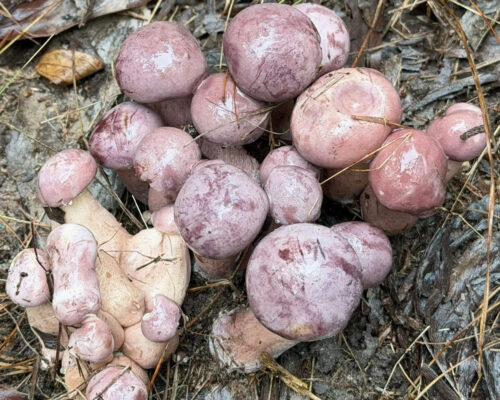
The mushrooms have grown in the morning
A Unique Ecosystem for a Rare Mushroom
Although Melaleuca forests can be found in many regions, not every forest produces these mushrooms. Locals believe that the specific climate and soil conditions of Phu Quoc create the perfect environment for their growth.
Fallen Melaleuca leaves cover the forest floor, forming a thick layer of organic mulch. After the first seasonal rains, heat and humidity build up beneath this layer, creating ideal conditions for fungal spores to develop. Within days, small, round, purple mushrooms begin to emerge quietly from beneath the leaves.
The mushrooms in Phu Quoc are typically small (about the size of a finger) and hidden under the forest litter. One of their most fascinating characteristics is their ability to change color rapidly. When first sprouting, they display a deep purple hue, but as soon as sunlight touches them, the color fades almost instantly. This transformation is part of what makes them so intriguing and special.
A Race Against Time
Melaleuca mushrooms grow extremely quickly but also have a very short lifespan. From the moment they emerge, they may last only one to two days. As a result, locals must head into the forest early in the morning, often at dawn, to harvest them at their freshest.
If exposed to too much sunlight, the mushrooms expand rapidly and lose some of their desirable flavor and texture. Smaller, unopened mushrooms are considered the best quality and can fetch high prices, ranging from about 250,000 to 450,000 VND per kilogram, depending on the time of the season. Larger, fully opened mushrooms are less valuable and significantly cheaper.
For many, mushroom picking is not just a livelihood but also an enjoyable experience. Both adults and children take part in early morning excursions into the forest. However, visitors are advised to go with local guides to avoid getting lost and to stay safe from potential dangers such as snakes or insects.
From Forest to Table
Once harvested, the mushrooms in Phu Quoc are quickly brought home for processing to preserve their freshness. Locals trim the roots, wash them thoroughly, and prepare them immediately. To reduce their natural bitterness, the mushrooms are typically boiled several times before cooking.
After this preparation, the mushrooms undergo another transformation: their caps open into a rounded shape, turning a glossy brown with milky white edges, while the stems become bright white. This visual change adds to their appeal and signals that they are ready to be used in cooking.
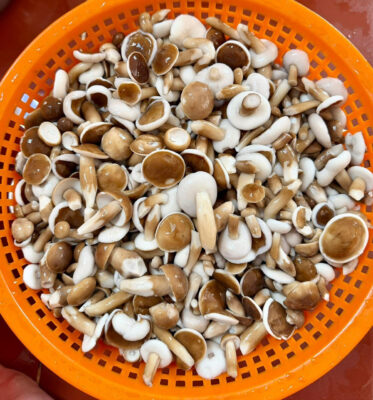
After being boiled, the mushrooms turn into a glossy brown with milky white edges, while the stems become bright white
A Delicate but Flavorful Ingredient
Melaleuca mushrooms are commonly used in traditional Vietnamese dishes, especially soups. A popular preparation involves cooking them with dried shrimp, minced pork, or crab meat, along with a small amount of egg to enhance the natural sweetness and nutritional value.
The dish is typically garnished with finely chopped scallions, cilantro, and a sprinkle of Phu Quoc pepper, known for its strong aroma. The result is a light, fragrant soup that reflects the essence of local cuisine, simple yet deeply satisfying.
In restaurants, chefs may also combine the mushrooms with vegetables such as cauliflower and carrots, along with seafood like shrimp and squid, all simmered in a rich bone broth. These variations highlight the versatility of the ingredient while preserving its distinctive taste.
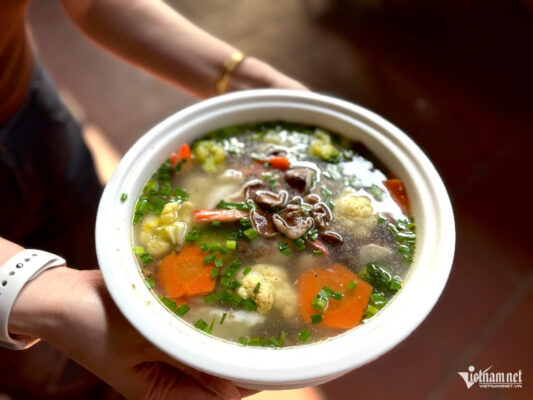
Local people usually cook mushrooms with seafood
A Rare Culinary Treasure
Despite its modest appearance, the Melaleuca mushroom holds a special place in the culinary culture of Phu Quoc. Its rarity, fleeting season, and unique characteristics make it more than just an ingredient, it is a symbol of the island’s natural richness and biodiversity.
For travelers, encountering this mushroom is both a culinary and cultural experience. It offers a glimpse into the rhythms of nature and the traditions of local life, where people depend on seasonal gifts from the land.
Because it cannot be farmed and only appears briefly each year, the Melaleuca mushroom remains a true delicacy that reminds visitors that some of the most valuable treasures in the world cannot simply be bought, but must be discovered at the right place and the right time.