Vietnam Transportation, News
Can Gio’s Opportunity to Break Into a New International Destination
When transportation infrastructure is opened and a mega tourism-resort-entertainment complex is completed in Can Gio, it is expected to become a powerful magnet for visitors, with the goal of welcoming about 40 million visitors per year.
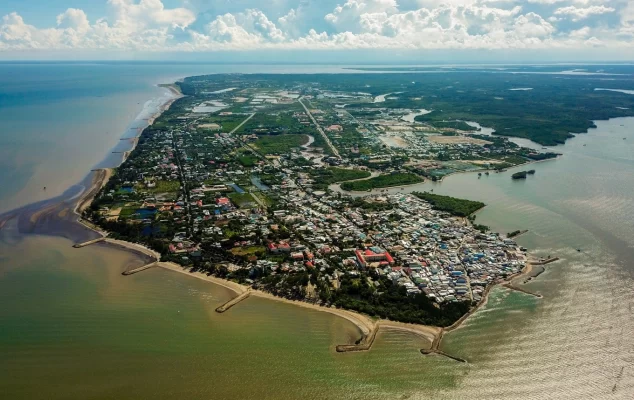
The view of Can Gio from flycam
At the seminar “Developing Can Gio into the New Tourism Growth Pole for Ho Chi Minh City,” organized by the Ho Chi Minh City Tourism Department on the afternoon of January 29, many experts and administrators said that Can Gio tourism is entering a new development phase oriented toward high quality and sustainability. They emphasized that the current momentum comes from the connection between multi-modal transport infrastructure and the emergence of large-scale tourism-entertainment mega projects.
In the new spatial development structure of Ho Chi Minh City, Can Gio is identified as a sea-facing zone and plays an important role in the city’s strategy to expand its urban-ecological-tourism space. Possessing a UNESCO-recognized mangrove ecosystem, a coastline of more than 23 kilometers, and ample available land, this locality has many advantages for developing large-scale ecotourism, leisure, and entertainment tourism.
Breaking Down the Accessibility Constraint
For a long time, Can Gio’s biggest challenge has been accessibility. From the city center, travel has primarily depended on ferry services, which take a long time and restrict the formation of large visitor flows. Developing Can Gio into a new tourism growth hub comes at a time when the city has undertaken major adjustments in its broader development planning.
Mr. Pham Huy Binh, Director of the Ho Chi Minh City Tourism Department, explained that transport links to Can Gio are being invested in with participation from major domestic and international companies. Key projects such as the Can Gio Bridge, the Ben Thanh – Can Gio high-speed railway line, and the Can Gio – Vung Tau sea crossing road will form a multi-directional connection network, significantly shortening travel time between the city center and Can Gio as well as other major economic regions in southern Vietnam.
Efforts are also underway to restore waterway routes between Ben Bach Dang – Can Gio – Vung Tau with scenic tourism services, creating a foundation for Can Gio to transform from a “ecological island” into a high-end tourism destination, relieving visitor pressure on the city center.
“It’s not just about tourism – the development of multi-modal infrastructure opens up potential for Can Gio to become a marine economic gateway, a logistics and services hub, forming a foundation for a new development space for the city,” Mr. Binh said.
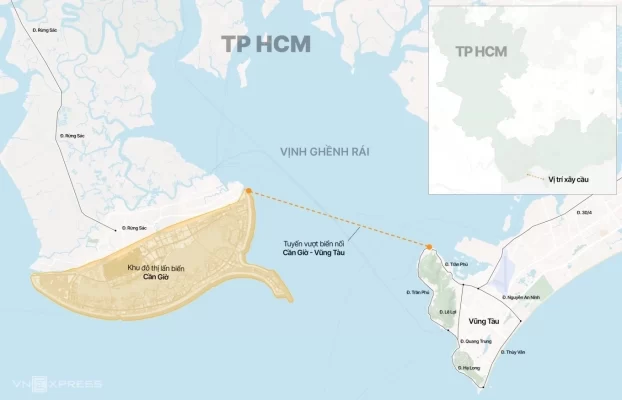
Proposed location of the sea-crossing route connecting Can Gio and Vung Tau
The Essential Role of Mega Integrated Complexes
Alongside infrastructure, experts believe that the emergence of mega tourism-entertainment complexes will be a decisive factor in converting potential into actual visitor numbers. According to Ms. Nguyen Thi Hoa, Marketing Director of Vinpearl, experiences from domestic and international tourism development show that infrastructure is only a necessary condition: what truly attracts visitors and sustains interest is the tourism product offering itself.
Ms. Hoa explained that Vinhomes Green Paradise is designed to be a flagship super-urban area of Ho Chi Minh City and also a unique iconic destination in Vietnam and the broader region. The project will not only integrate world-class resorts and entertainment venues but also bring together international-grade facilities capable of hosting large cultural, entertainment, and sports festivals.
“In terms of leisure, entertainment, culture, and sports, Can Gio is the only destination in Vietnam that can offer a full range of experiences,” she said.
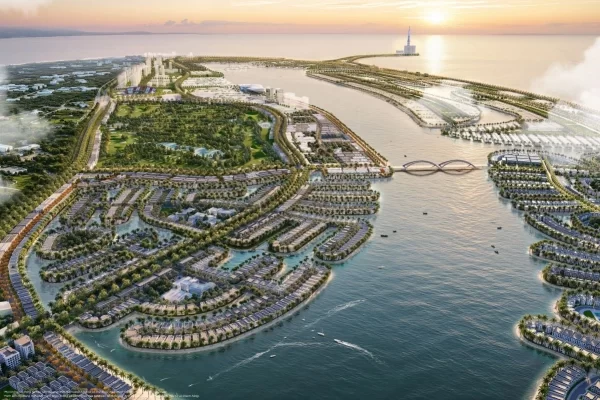
Vinhomes Green Paradise in Can Gio
Key Attractions Within the Mega Project
Specific elements of the project include:
-
Blue Waves Theatre – a 7-hectare performing arts venue with two auditoriums and a total capacity of 5,000 seats.
-
Two 18-hole golf courses built to international standards.
-
Paradise Lagoon – an 800-hectare natural seawater lagoon.
-
Landmark Harbour – a 5-star international cruise terminal.
-
A 108-story landmark tower.
-
A 7,000-room integrated resort hotel complex.
-
VinWonders Can Gio – a 122-hectare entertainment park offering nearly 200 games and experiences, such as a 68-meter artificial snow mountain with a 5-hectare snow house, the first motor-cycle themed roller coaster in Vietnam, and a drop tower with integrated film projection technology.
In addition, Vinmec Can Gio Hospital and the Vin New Horizon Can Gio project are expected to attract health-focused tourism from around the world.
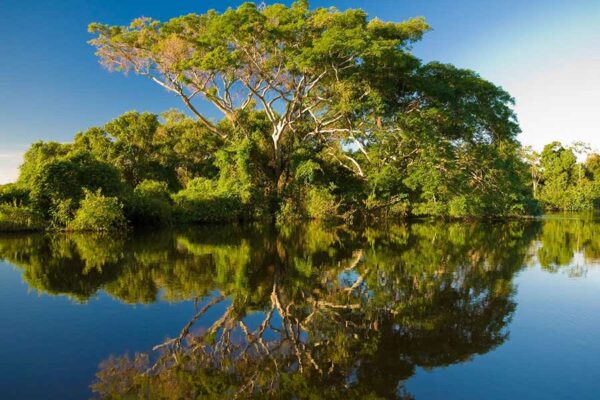
Flooded forest in Can Gio
A Broader Economic and Tourism Vision
Ms. Hoa emphasized that Can Gio is not only expected to become a leading regional tourism and experience hub but also a new growth pole that drives Ho Chi Minh City’s economy into double-digit growth in the new era. The product ecosystem is being developed to serve diverse needs, from leisure and entertainment to major events, appealing to a wide range of visitor groups from the elderly and youth to families.
With this comprehensive structure, the mega complex is hoped to be a direct driver in transforming the city into a large-scale resort and entertainment destination, aiming to draw approximately *40 million visitors annually once fully operational.
Can Gio Tourism Growth Trends and Goals
In 2025, Ho Chi Minh City’s tourism industry recorded a strong breakthrough, welcoming nearly 8.6 million international visitors (up 40.3%) and almost 46 million domestic visitors (up 20%) with total tourism revenue reaching around 279 trillion VND. The city has set a target of serving approximately 61 million visitors in 2026, including 11 million international and 50 million domestic tourists, with total tourism revenue expected to reach roughly 330 trillion VND.
Many experts at the seminar said that once multi-modal transport routes open and the mega tourism complexes begin operations, the combined effect will become even more pronounced. Shorter travel times will expand the tourist market scale, and large-scale projects will give visitors more reasons to stay longer. Consequently, both visitor flows and investment are expected to increase significantly, creating a leap forward for Can Gio tourism.
Mr. Vo Anh Tai, Deputy General Director of Saigontourist Group, noted that the city is not just a new tourism area but the seafront strategic space of Ho Chi Minh City, where beach, mangrove forests, marine economy, and a world biosphere reserve converge.
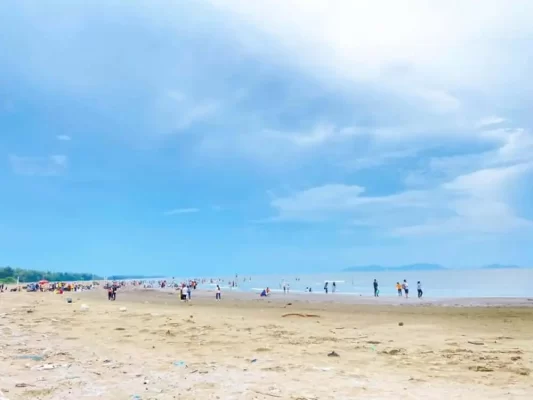
The view of Can Gio beach
Can Gio – A Destination on the Global Rise
According to Mr. Ha Van Sieu, Deputy Director General of the Vietnam National Tourism Administration, the city stands before many development opportunities over the next five years. Vietnam’s tourism industry aims to attract 25 million international and 150 million domestic visitors in 2026, with projections of 30–35 million international and 160–180 million domestic visitors by 2030. Can Gio is positioned as a new growth pole in Ho Chi Minh City’s strategy to shift tourism focus from wide-scale development to deeper cultural and spiritual value, blending modern urban design with local nature and tradition.
The careful design of products and experiences is expected to elevate Can Gio into a high-quality destination with distinctive identity that harmonizes modernity and heritage, civilisation and natural scenery and firmly places it on the map of international tourism destinations.