News
10 Festivals from North to South in Vietnam in the First Lunar Month
Many Festivals including Perfume Pagoda Festival, Con Temple Festival, and Ba Thien Hau Festival all take place during the first lunar month, attracting tens of thousands of visitors who travel in early spring to pray for luck and blessings.
Vietnam’s first lunar month, following the Lunar New Year, is considered one of the most sacred and festive periods of the year. Across the country, major traditional festivals are held to honor deities, historical heroes, and cultural traditions. These events blend solemn rituals with lively folk activities, creating a vibrant cultural tapestry stretching from northern mountains to southern cities.
Perfume Pagoda Festival – Hanoi
The Perfume Pagoda Festival takes place from February 18 to May 11 (from the 2nd day of the first lunar month to the 25th day of the third lunar month). The festival space covers the entire Perfume Pagoda Special National Relic Complex in My Duc District, with four main pilgrimage routes and around 20 temples, shrines, and caves dedicated to Buddhist worship. Visitors can explore not only the main Thien Tru – Huong Tich route but also sites such as Thanh Son Pagoda, Huong Dai Cave, Long Van Pagoda, Cay Khe Pagoda, Nguoi Xua Cave, and Tuyet Son Pagoda.
Beyond its religious significance, the festival also offers scenic boat trips along limestone mountains and streams, creating a harmonious blend of spiritual pilgrimage and eco – tourism. After the traditional rituals end, local authorities continue organizing cultural, religious, sports, and artistic activities to extend the tourism season and welcome visitors year – round.
This festival is often regarded as one of Vietnam’s longest and most spiritually meaningful spring pilgrimages, symbolizing the journey toward enlightenment and inner peace.
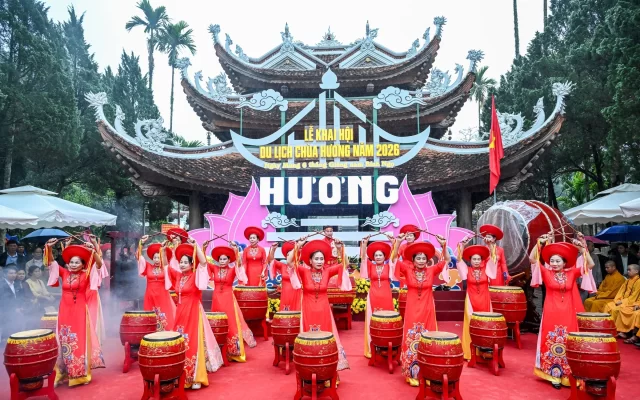
Perfume Temple Festival
Lim Festival – Bac Ninh Province
The Lim Festival, a representative celebration of the Kinh Bac cultural region, is held annually from the 13th to the 15th day of the first lunar month. It is famous as the cradle of Quan Ho folk singing, a UNESCO – recognized intangible cultural heritage.
The ceremonial section includes traditional rituals honoring local tutelary gods, while the festive section is lively with Quan Ho duet performances on boats, folk games, and communal cultural activities that attract large numbers of visitors. Bac Ninh Province is often called the “land of festivals,” hosting nearly 500 festivals throughout the year, which together create a distinctive cultural landscape of northern rural Vietnam.
These performances not only preserve folk art but also serve as a platform for community bonding and cultural transmission across generations.
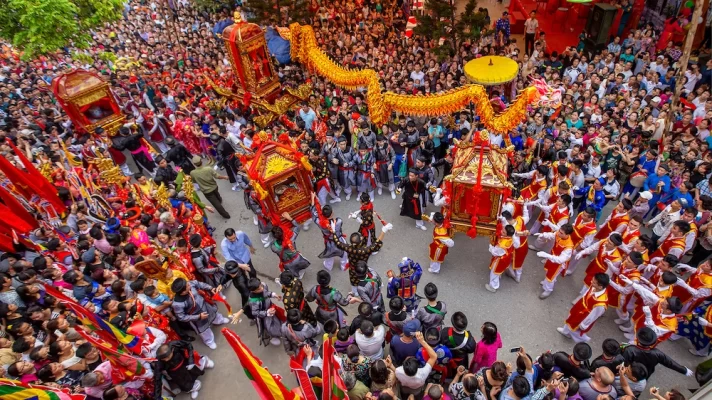
Lim Festival
Yen Tu Spring Festival – Quang Ninh Province
The Yen Tu Spring Festival officially opens on February 26 (the 10th day of the first lunar month) at Truc Lam Palace within the Yen Tu Historical and Scenic Relic Complex. Located at an elevation of 1,068 meters above sea level, Yen Tu is renowned for its majestic landscape and ancient temples, hermitages, and towers hidden within old-growth forests.
Yen Tu is also the birthplace of the Truc Lam Zen Buddhist sect, established more than 700 years ago. The festival lasts about three months, making it one of the largest and longest spring festivals in Vietnam, drawing millions of pilgrims and tourists each year.
Pilgrims climb the sacred mountain as a symbolic journey of spiritual purification and devotion, combining physical endurance with religious reflection.
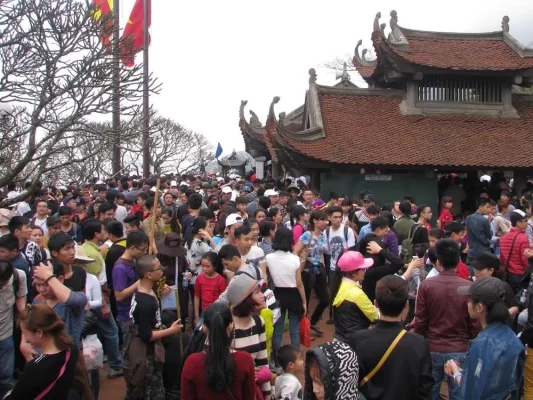
Yen Tu Spring Festival
Tran Temple Festival – Ninh Binh / Nam Dinh Region
Tran Temple, located on Tran Thua Street in Nam Dinh Ward, is part of a relic complex associated with the Tran Dynasty at Thien Truong Prefecture. The Tran Temple Festival, one of the largest in northern Vietnam, takes place from the 11th to the 16th day of the first lunar month, featuring three main rituals: Seal-Opening Ceremony, Jade Palanquin Procession, and Water Procession for fish offerings.
The Seal-Opening ritual held on the night of the 14th lunar day originates from the Tran Dynasty tradition after victories against Mongol invaders, symbolizing the start of a prosperous and orderly new year.
Today, receiving a ceremonial seal impression is believed to bring success in career, study, and governance.
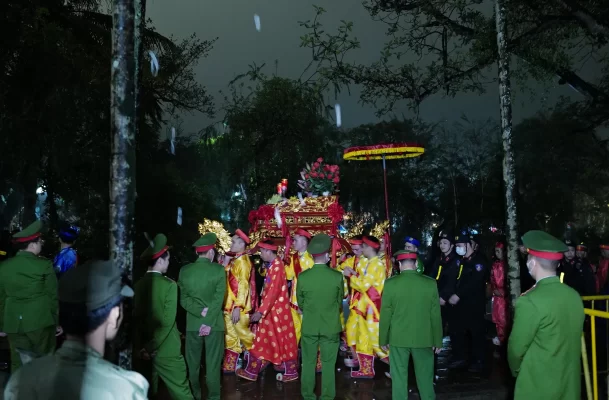
Tran Temple Festival
Con Temple Festival – Nghe An Province
The Con Temple Festival occurs from the 19th to the 21st day of the first lunar month. Besides solemn rituals, the festival features unique activities such as aerial palanquin processions, wrestling matches, boat races, and Ca Tru ceremonial singing. Recognized as a National Intangible Cultural Heritage in 2017, the festival reflects the deep spiritual life of coastal communities.
Located in Phuong Can Village, Quynh Mai Commune, about 75 km north of Vinh City, Còn Temple is considered one of the most sacred temples in the Nghe region.
Local sayings ranking sacred temples place Con Temple at the top, demonstrating its cultural importance.
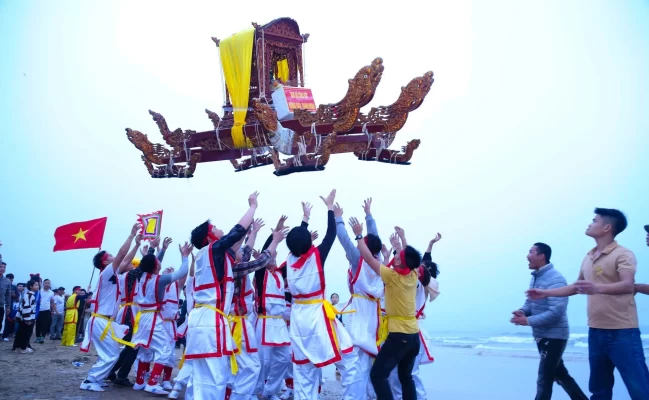
Con Temple Festival
Ba Thien Hau Temple Festival – Ho Chi Minh City / Binh Duong Area
The Bà Thien Hau Temple Festival begins in early lunar January, with the main celebration held on the full-moon day. It is one of the largest festivals in southern Vietnam, drawing thousands of participants. During the festival, the statue of Lady Thien Hau is placed on a palanquin and paraded through central streets of Thu Dau Mot, accompanied by lion and dragon dances, classical opera performances, and vibrant folk activities.
According to legend, Lady Thien Hau (real name Lin Mo Niang from Fujian, China) was deified in 1110 as a protector of seafarers. The procession honors the goddess and prays for favorable weather, safety, and prosperity for fishermen and merchants.
Besides Thu Dau Mot, other temples in Lai Thieu, Cho Bung, and Bung Cau also organize similar celebrations during the full-moon festival, creating a bustling pilgrimage atmosphere across southeastern Vietnam.
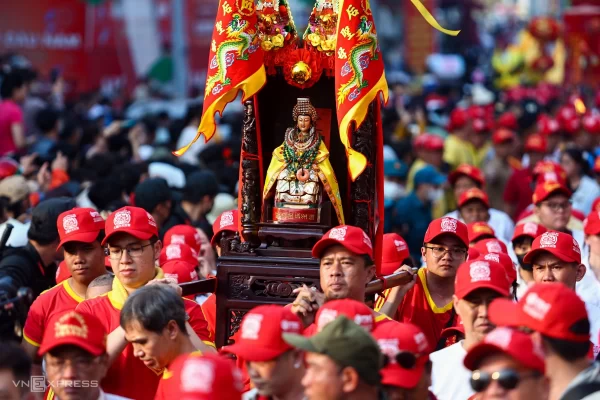
Ba Thien Hau Temple Festival
Cultural Significance of Lunar January Festivals
Across Vietnam, the first lunar month represents renewal, gratitude, and hopes for prosperity. Each festival reflects local beliefs, historical memories, and community identity. From mountainous Buddhist pilgrimages in the North to maritime goddess worship in the South, these festivals demonstrate the country’s cultural diversity while sharing a common purpose: seeking harmony between humans, ancestors, and nature.
In addition to religious ceremonies, festivals also serve as platforms for preserving folk arts such as Quan Ho singing, Ca Tru performances, traditional wrestling, and boat racing. They stimulate local tourism, boost regional economies, and provide opportunities for intergenerational cultural education. The blend of sacred rituals and joyful celebrations reveals how Vietnamese people value both spirituality and communal festivity.
Moreover, these festivals illustrate the continuity of ancient traditions in modern society. While urbanization and globalization reshape lifestyles, the annual return to temples, pagodas, and communal houses shows a persistent connection to heritage. Pilgrims and tourists alike participate not only to pray for luck but also to reconnect with national history and cultural roots.
Overall, the series of festivals held throughout the first lunar month forms a grand cultural journey from North to South, reflecting Vietnam’s rich spiritual life and vibrant community traditions that have been preserved for centuries.


Noi Bai International Airport – Ha Noi Car Rental Services
Car Rental
~ 1 hour